India
12:54 PM
Paytm Microloan - Designing inclusive credit for everyday workers
Paytm Microloan is designed to give underserved workers access to small, instant loans without relying on formal credit history.
Millions of gig workers in India remain excluded from traditional lending systems due to lack of salary proof or credit scores. In moments of urgency, they are often forced to rely on informal borrowing, leading to financial and emotional stress.
This project explores how Paytm’s existing ecosystem can be used to create a faster, fairer, and more accessible microloan system that supports real user needs while unlocking new business opportunities.
Timeline
3 weeks
Role
Product Design
Scope
Product strategy, research, UX flows, prototyping
Impact
Designed a scalable credit model unlocking access for financially excluded users
Jump to Prototype
Context
This idea came from a real moment.
I overheard an auto driver saying this during a ride.
“Just give me ₹2,000… my mother has passed away and I need to go back to my village.”
He was being asked to give up his auto, his only source of income, in return for money. That moment revealed a larger problem.
Millions of workers, auto drivers, maids, delivery partners, live without access to formal credit. In emergencies, they rely on friends or fall into exploitative lending systems. At the same time, platforms like Paytm already sit at the center of their financial activity.
The problem
According to Niti Aayog, by 2030, India’s gig economy is projected to grow to over 25 million workers, yet a majority of these workers remain financially invisible to the formal banking system. With no fixed salary, no collateral, and often no credit history, nearly 70% of gig workers are denied personal loans by traditional institutions.
At the same time, most digital lending platforms including Paytm only offer loans starting at ₹10,000, often requiring formal employment or credit scores. But people living paycheck to paycheck don’t need ten thousand. They need small amounts money urgently and efficiently with re-payable interest rates.
Goals
Instead of designing another loan feature,
I focused on creating a new credit system for underserved users.
The product is built on three principles:
Access over eligibility → include users without credit history
Speed over process → enable loans in minutes
Trust over opacity → explain decisions clearly
The goal was to make borrowing feel simple and fair.
User Research
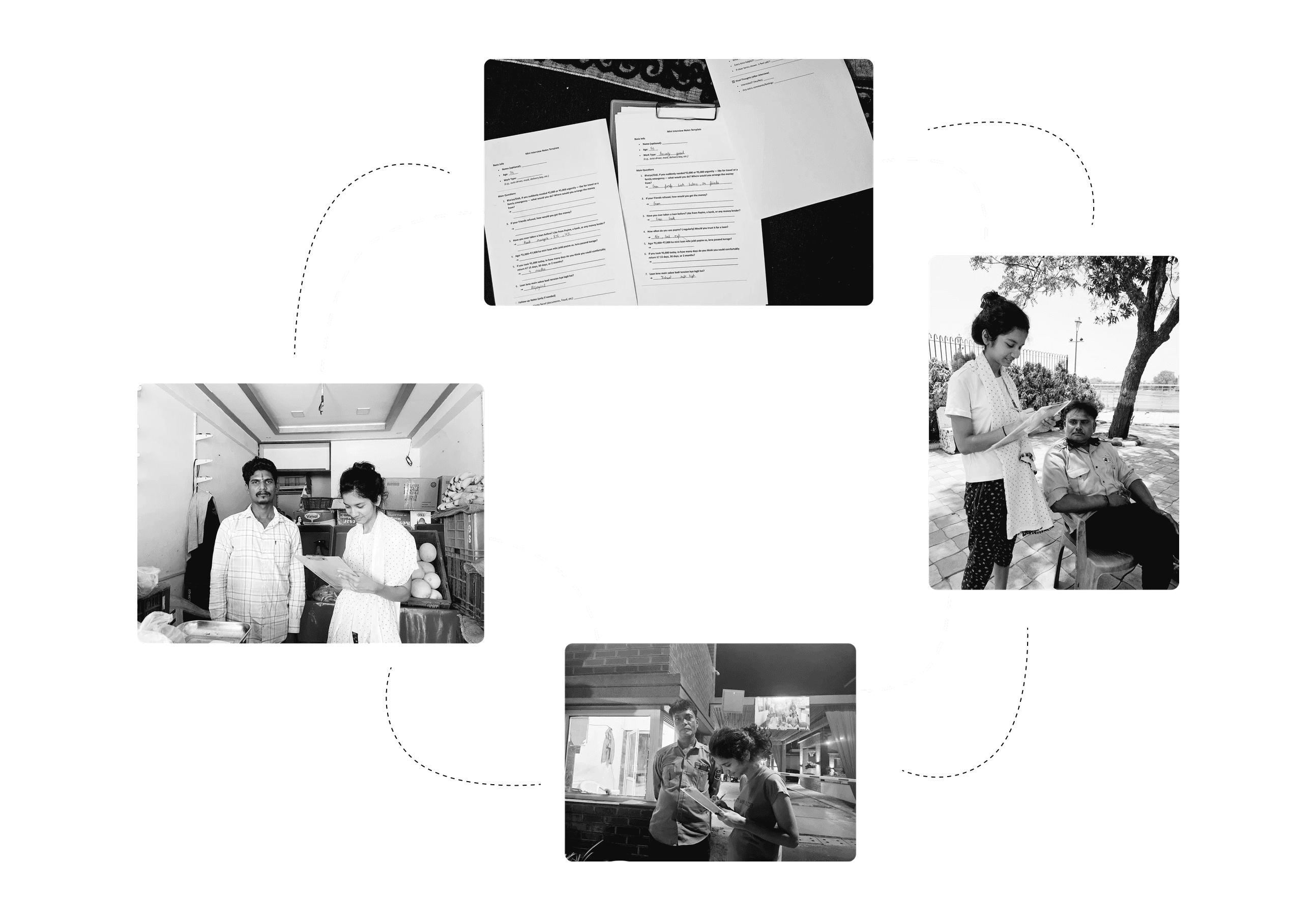
Qualitative interviews with daily wage earners such as auto drivers, security guards and small vendors were conducted
Key Findings
1) Paytm or Digital Trust Varies Greatly
Some users trust and regularly use digital platforms like Paytm, GPay, PhonePe.
Others—especially older users—avoid online services entirely.
2) Emergency Loans are a Real Need
Many have faced situations needing urgent funds (e.g., medical, personal issues).
Auto drivers especially turn to friends for loans, even against personal items (like gold), which brings emotional + financial stress.
3) High Bank Interest is a Barrier
Loans from banks come with high interest (8–12%) and long formalities.
Users feel a smaller, faster, lower-interest loan would be more helpful.
4) Flexibility in Repayment is Important
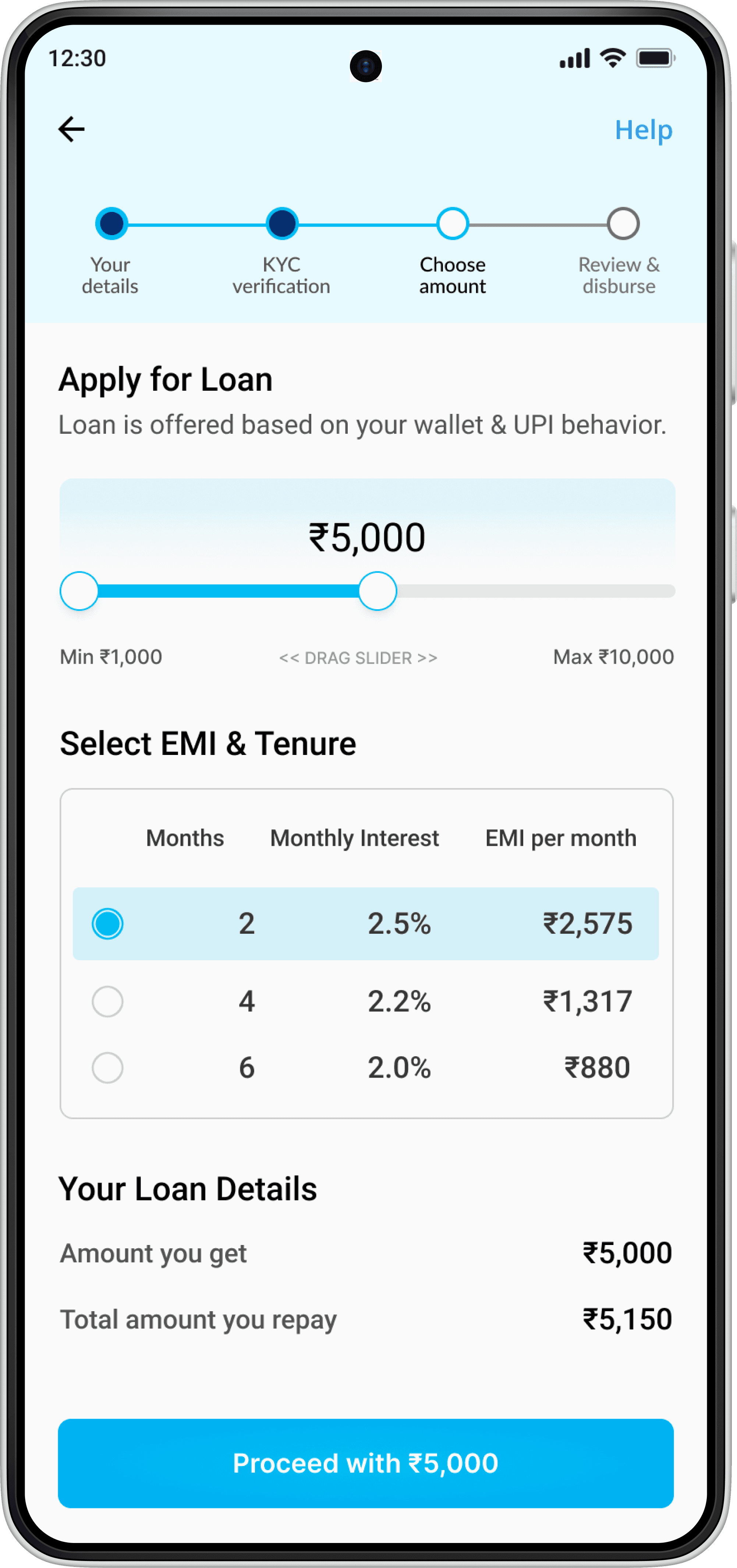
For a ₹5,000 loan, some said they’d need up to 4 months to repay.
Users value customizable repayment duration.
5) Loan Experience Level Varies
Some have never taken any formal loan before.
Others have taken high-value loans or borrowed informally from friends/family.
User flow
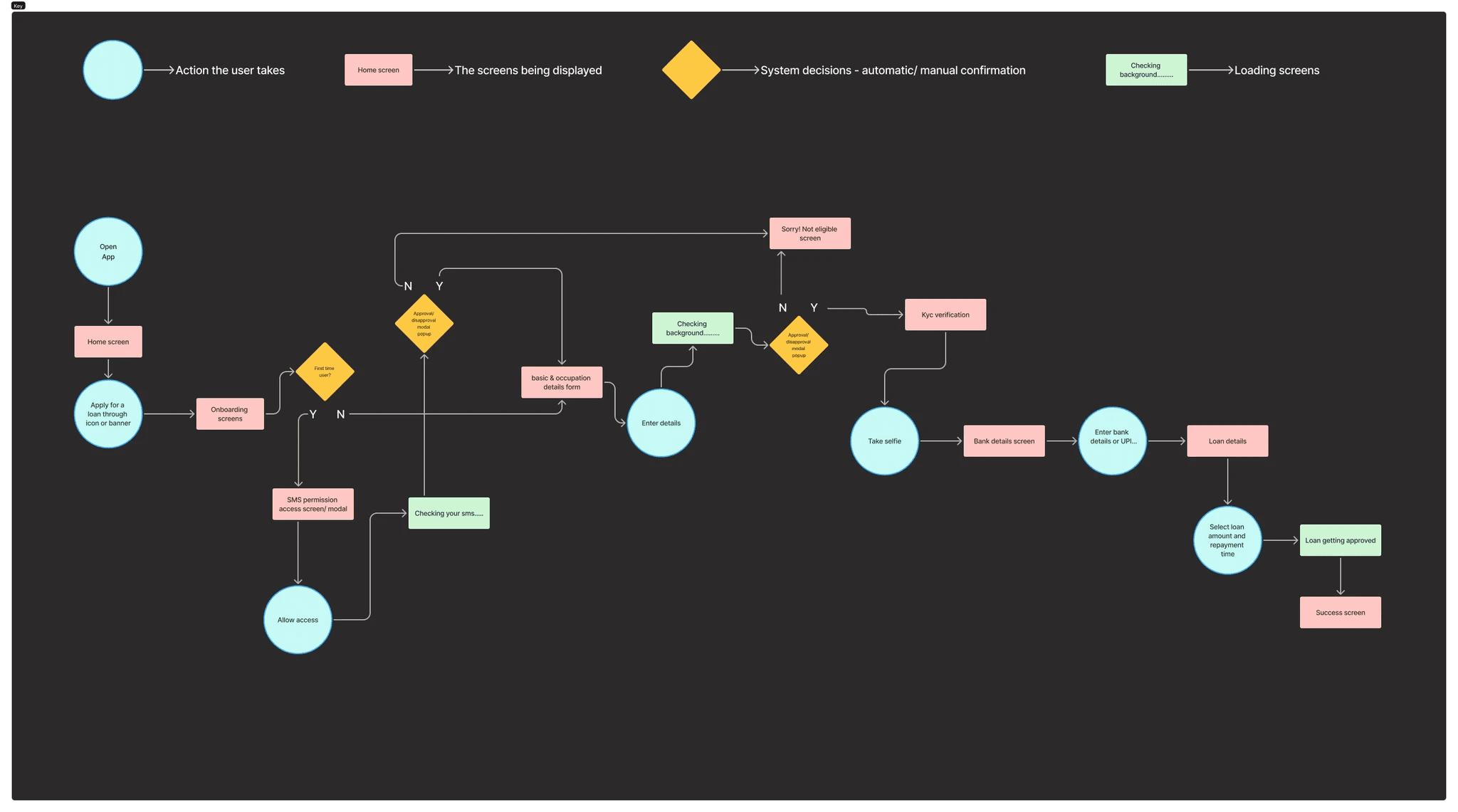
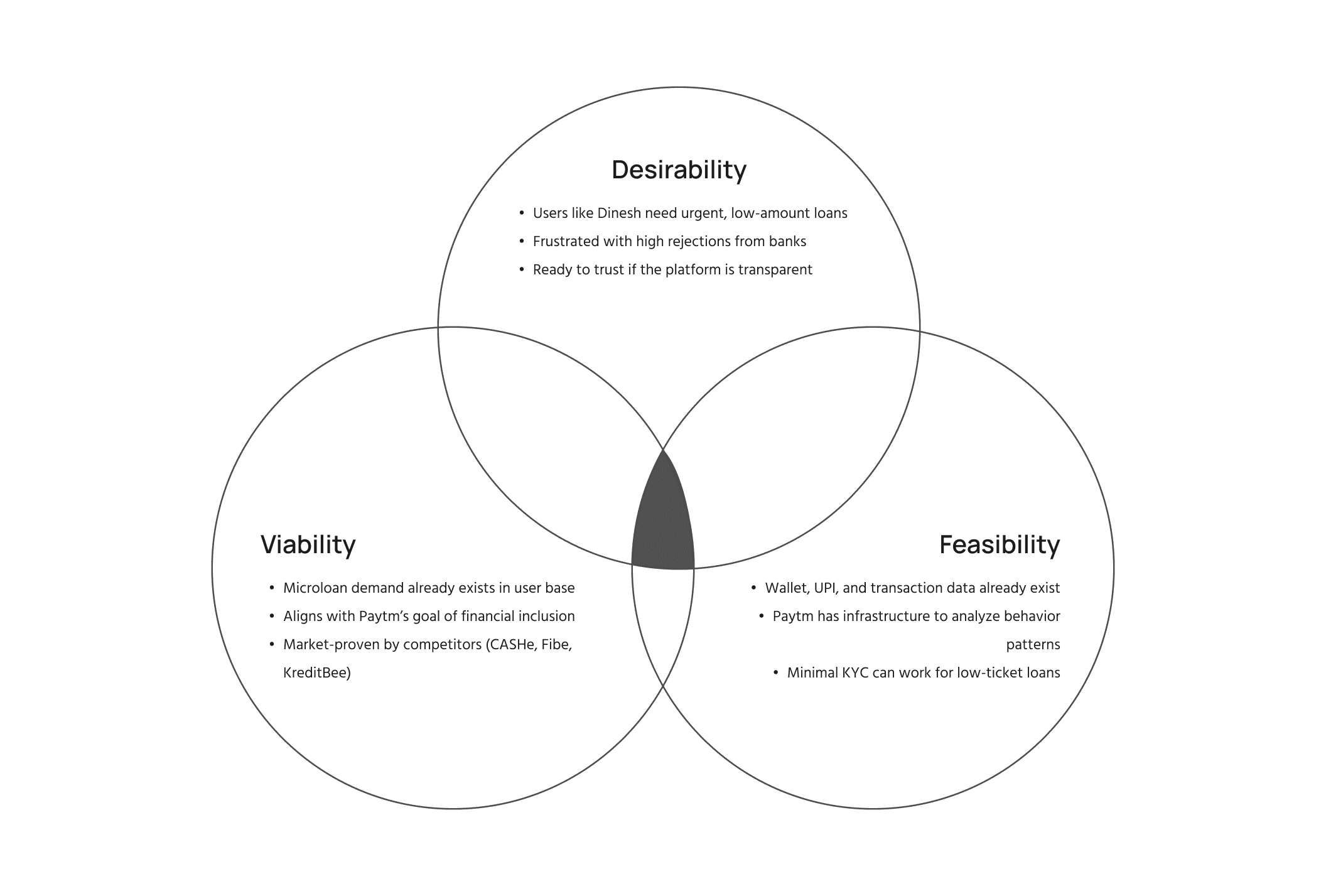
1. Alternative Credit Model Instead of CIBIL Dependency
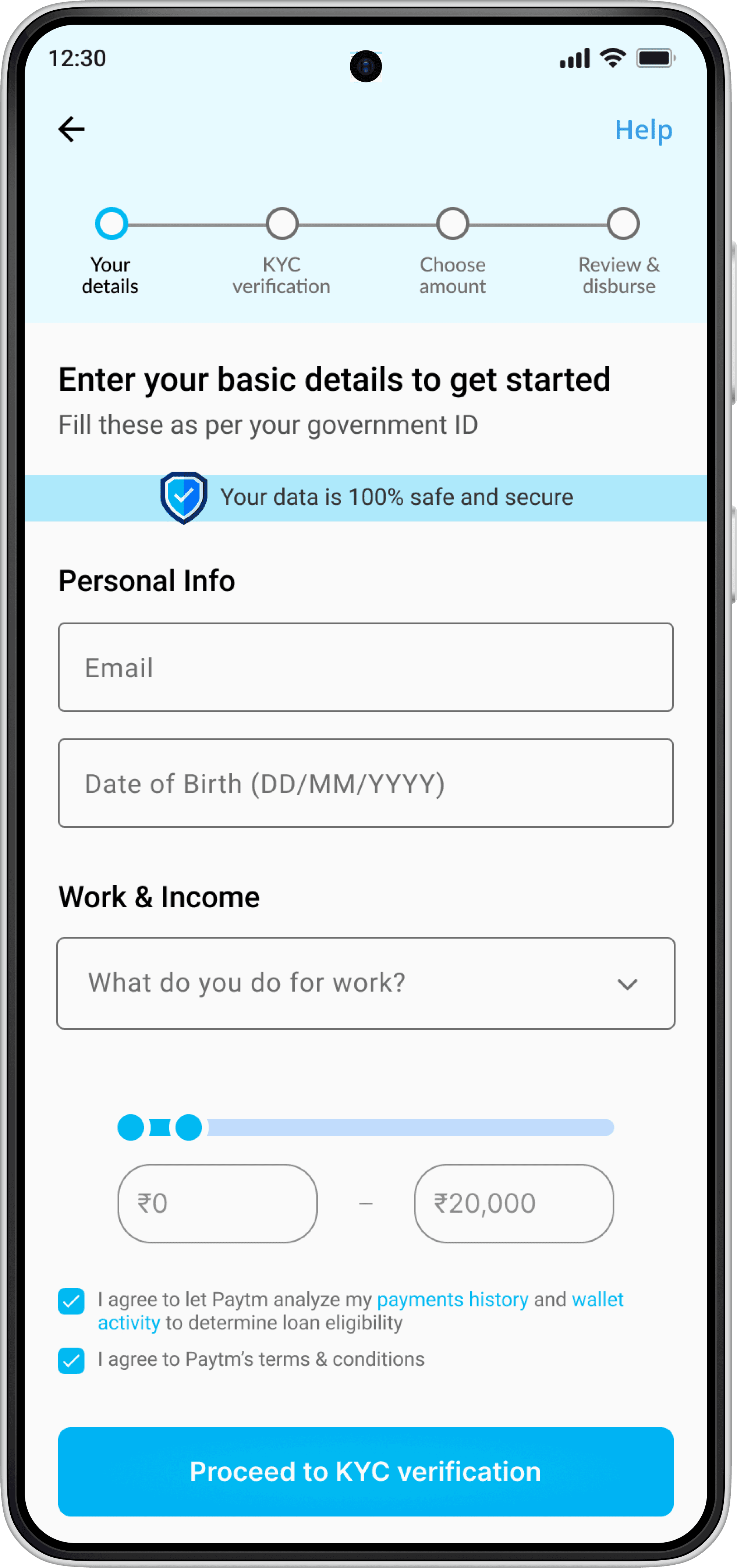
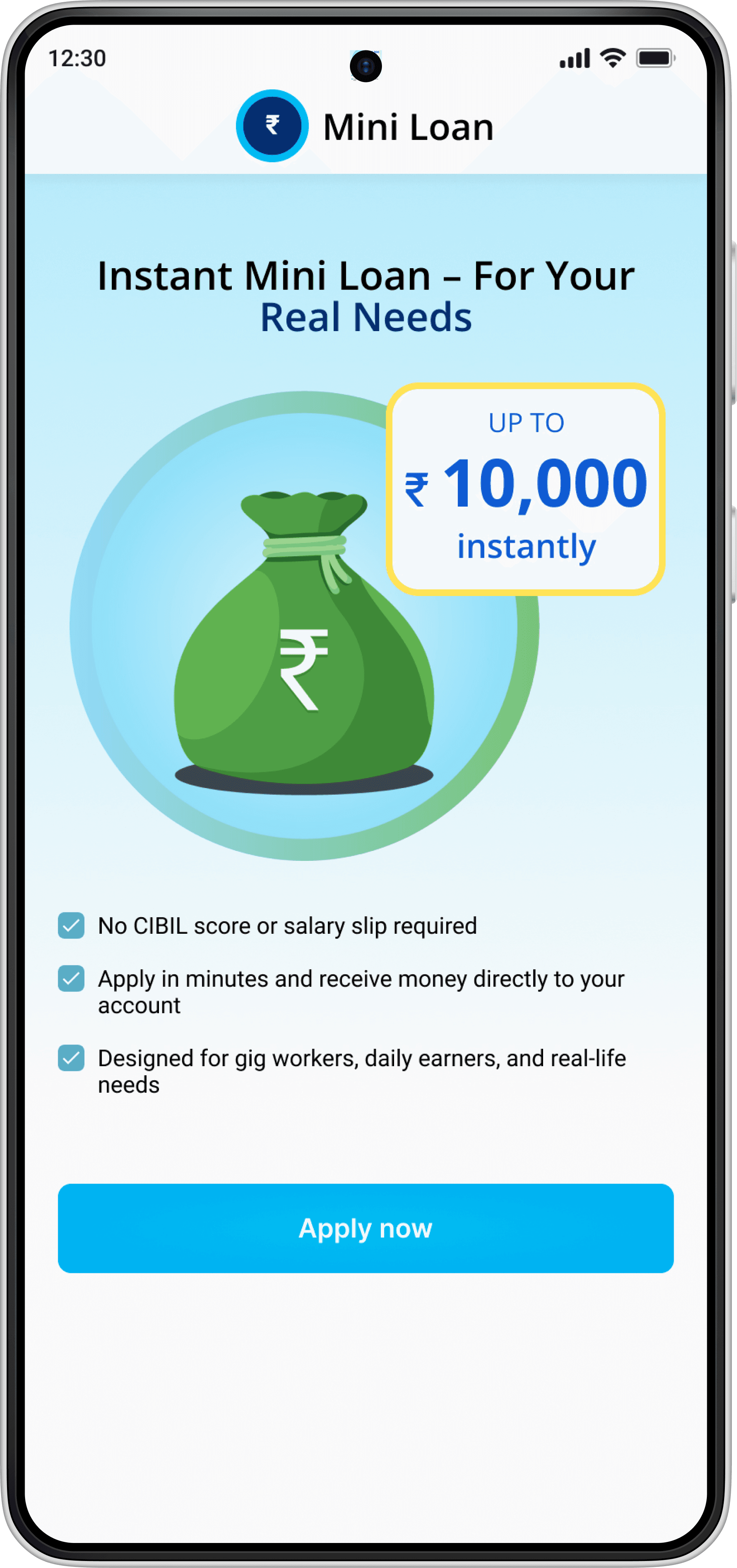
I designed a system that uses Paytm wallet, UPI, and transaction behavior as signals of creditworthiness, allowing users without formal credit history to access loans.
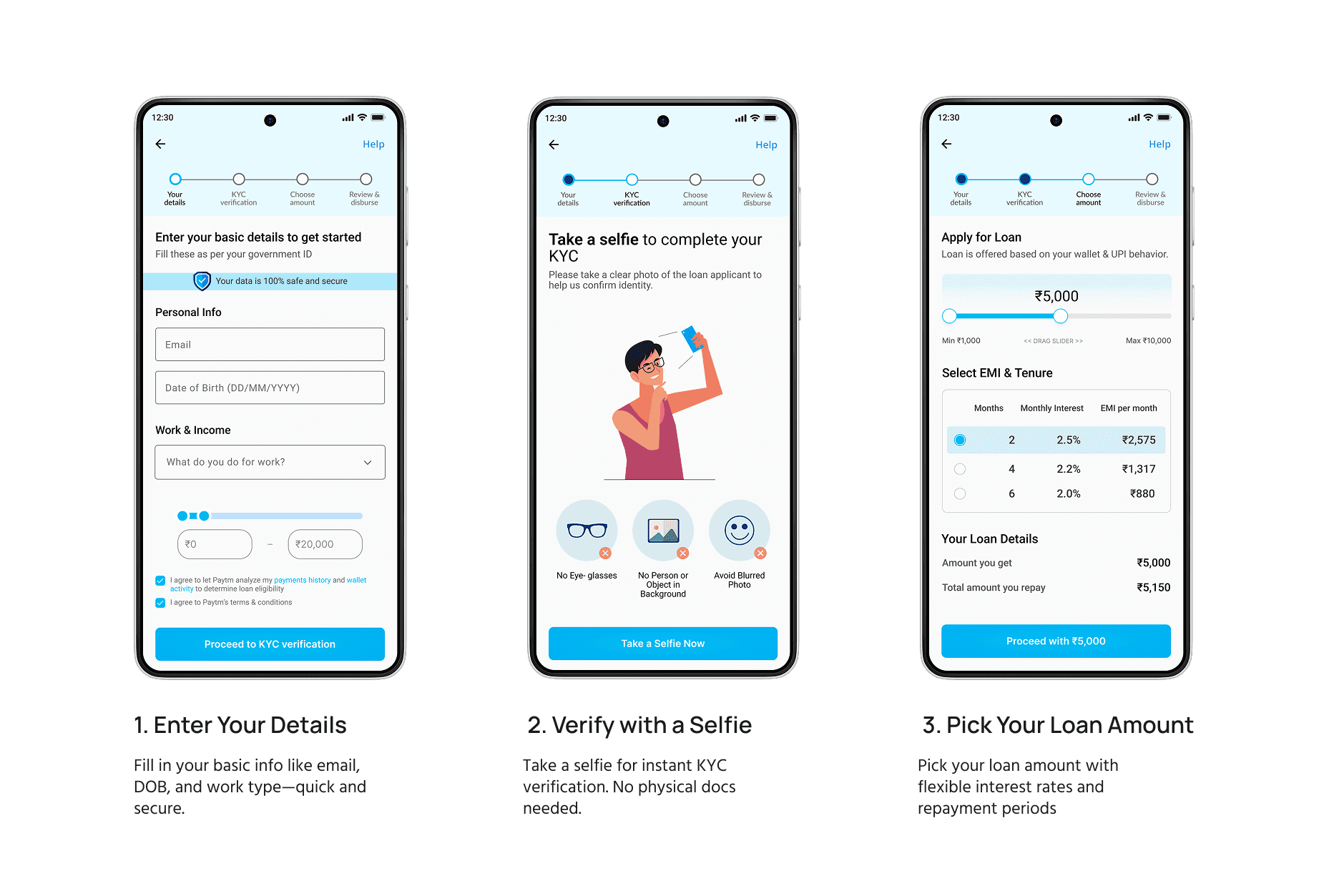
2. 3-Step Loan Flow
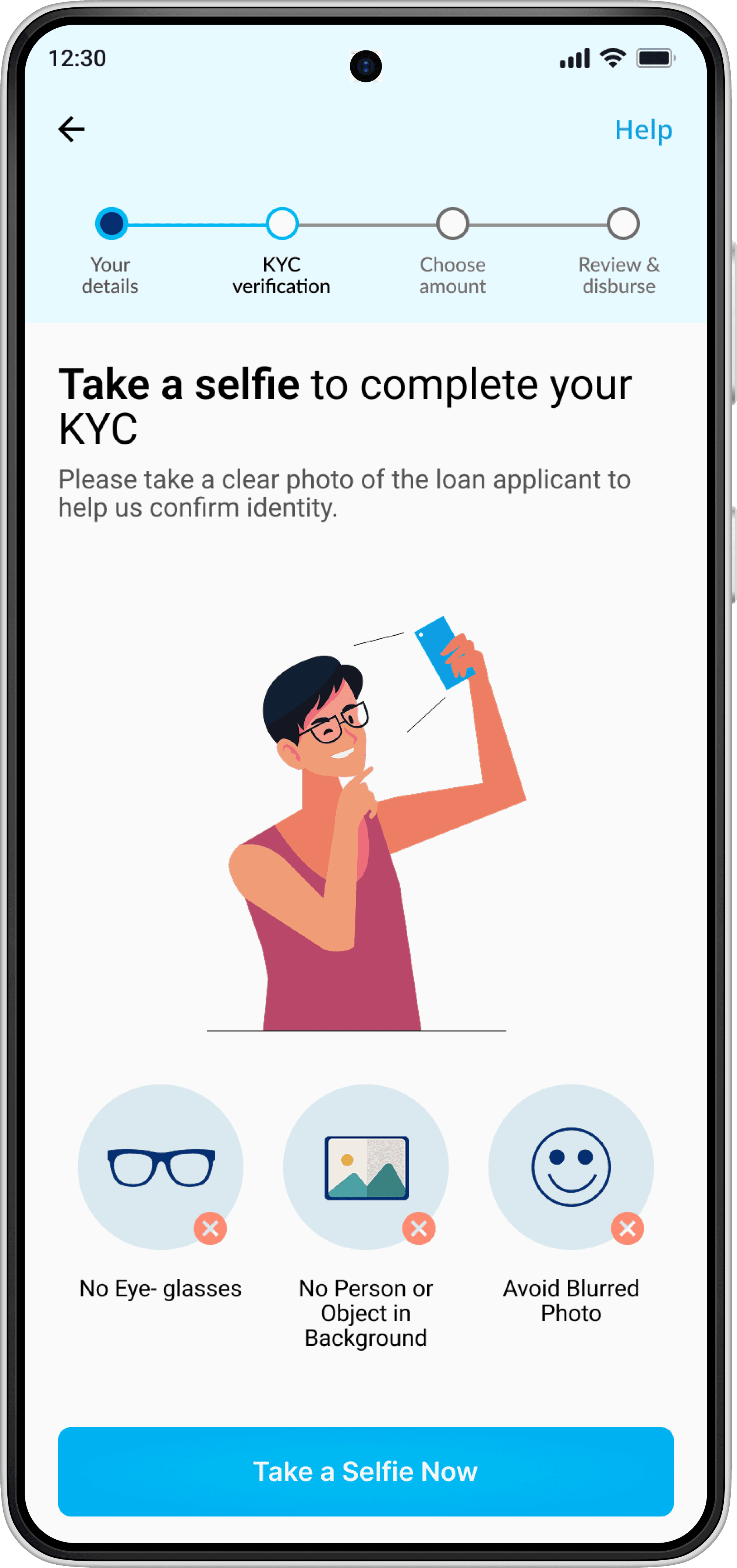
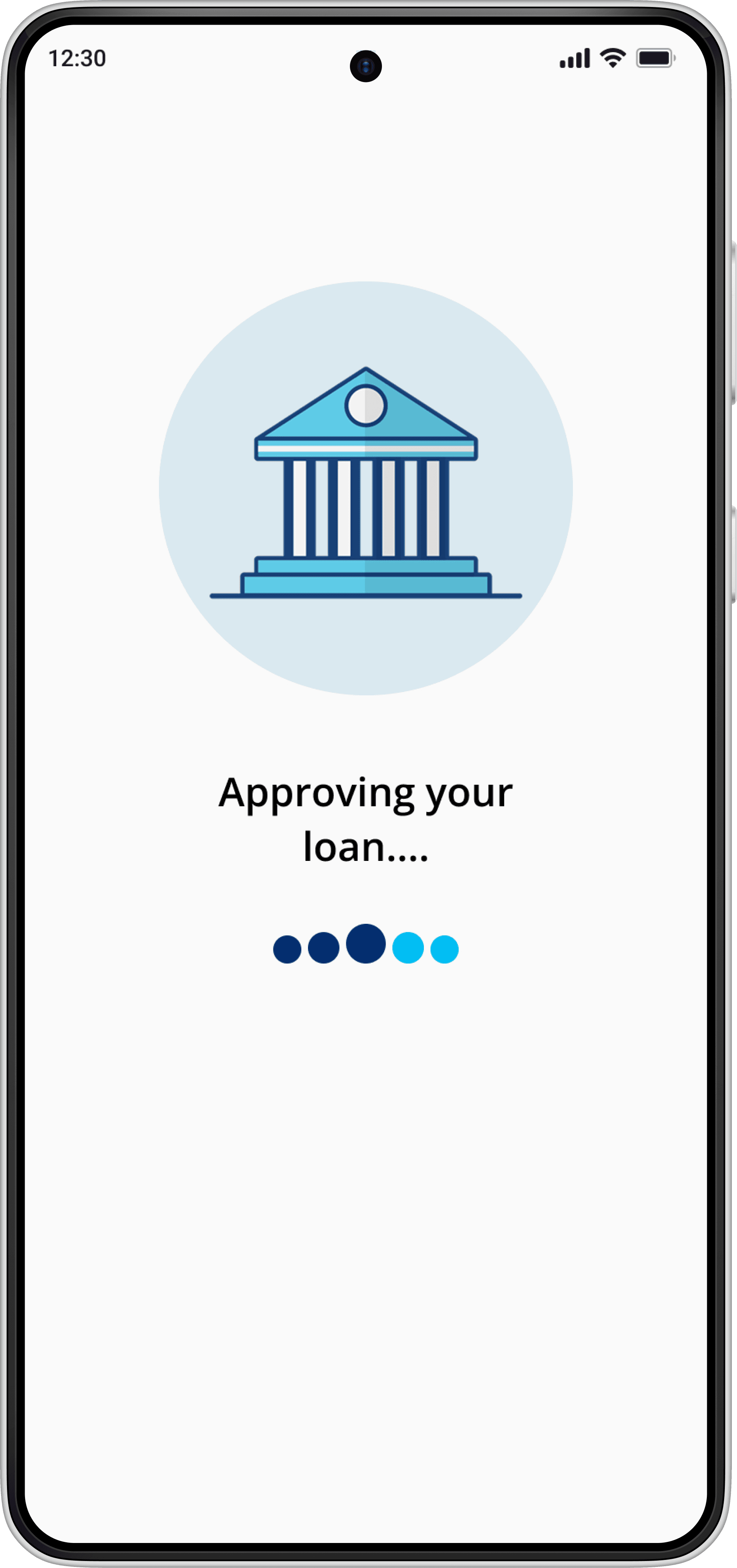
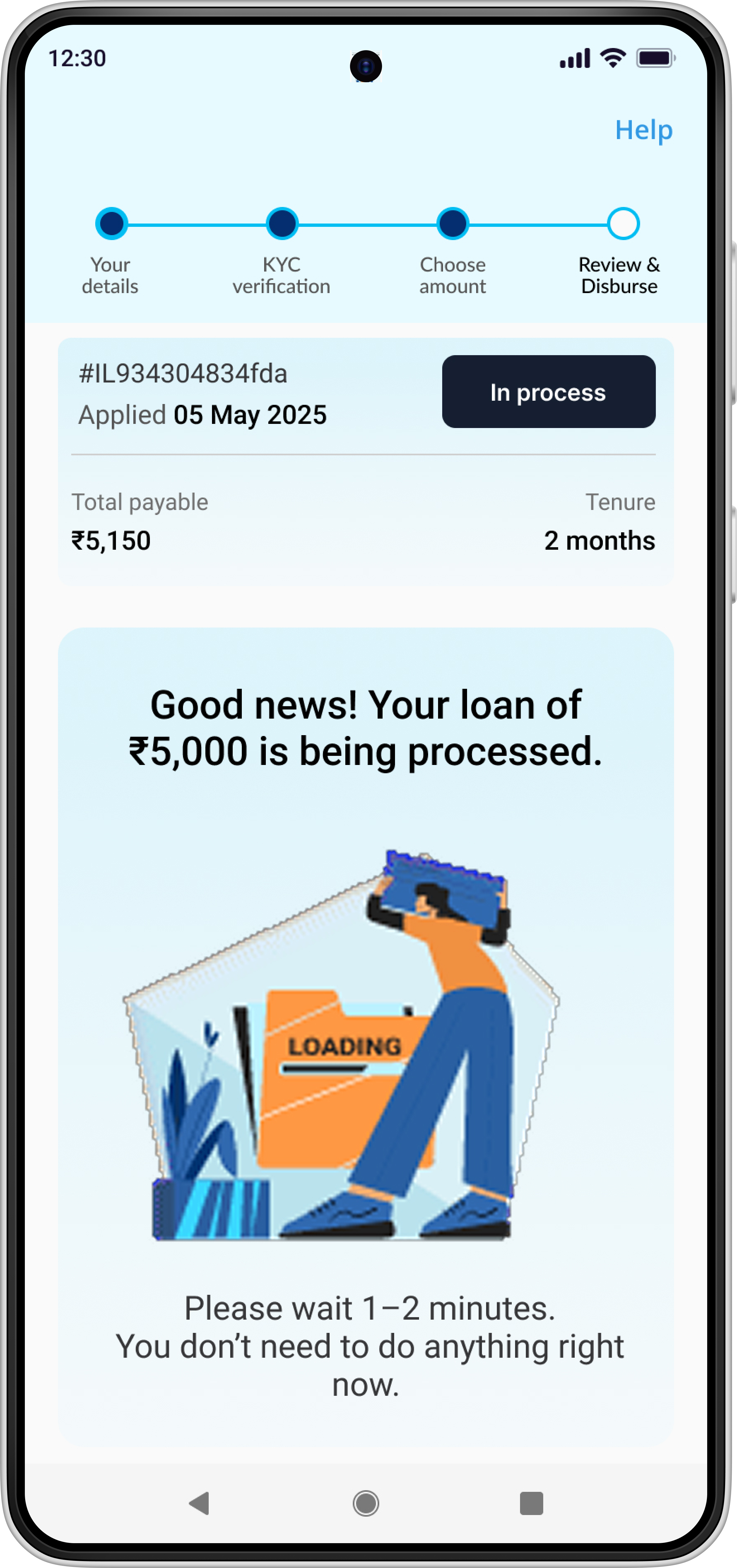
I reduced the loan process to a simple 3-step flow, where users enter basic details, complete quick KYC, and choose their loan amount, making the process fast and accessible even for low digital literacy users.
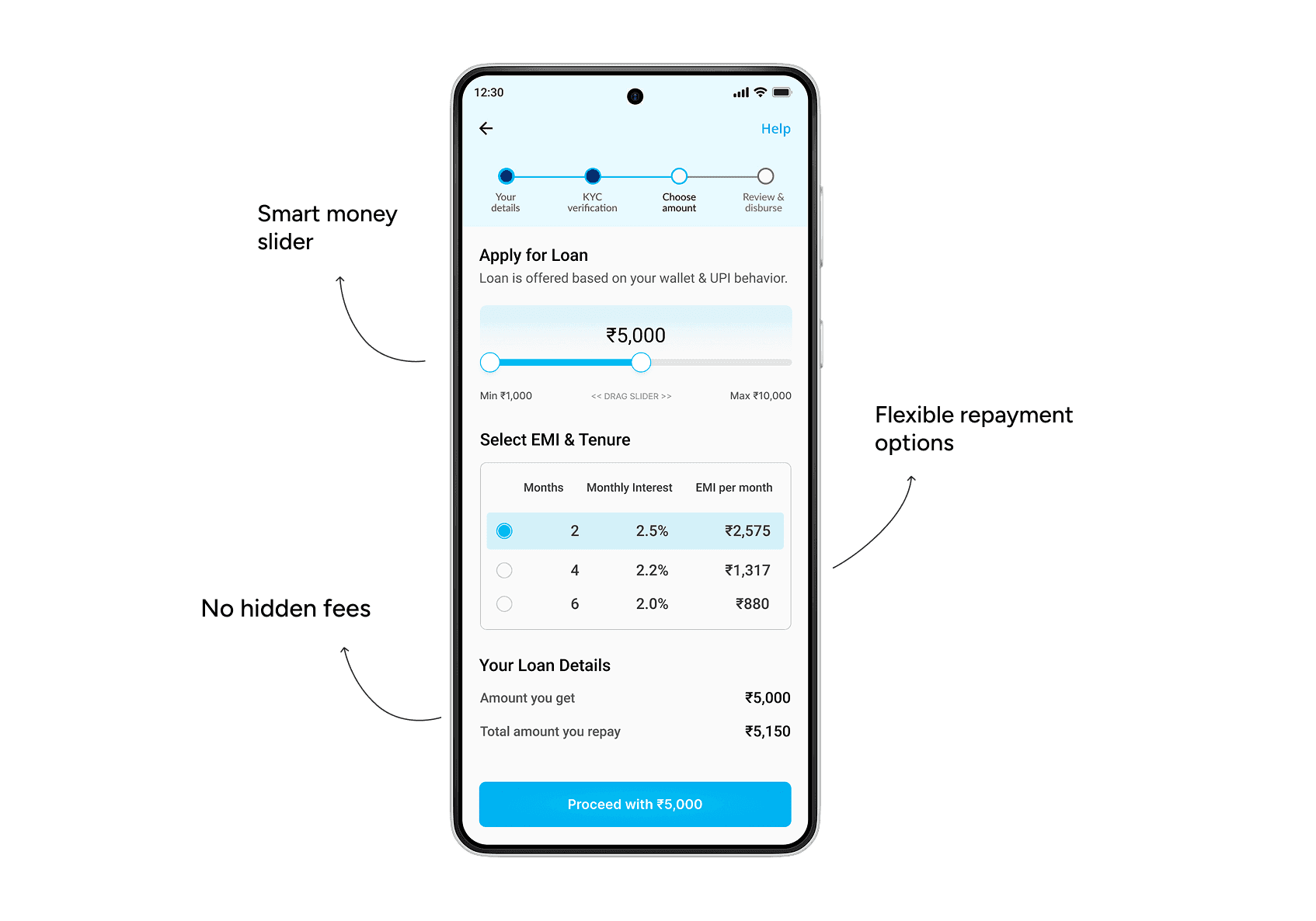
3. Small Loan Amounts Instead of High Minimum Limits
I enabled microloans starting from small amounts like ₹2,000–₹5,000, aligning with real user needs instead of forcing high-value loans.
"I barely get through the week with the money I earn" - shared by 96% of users
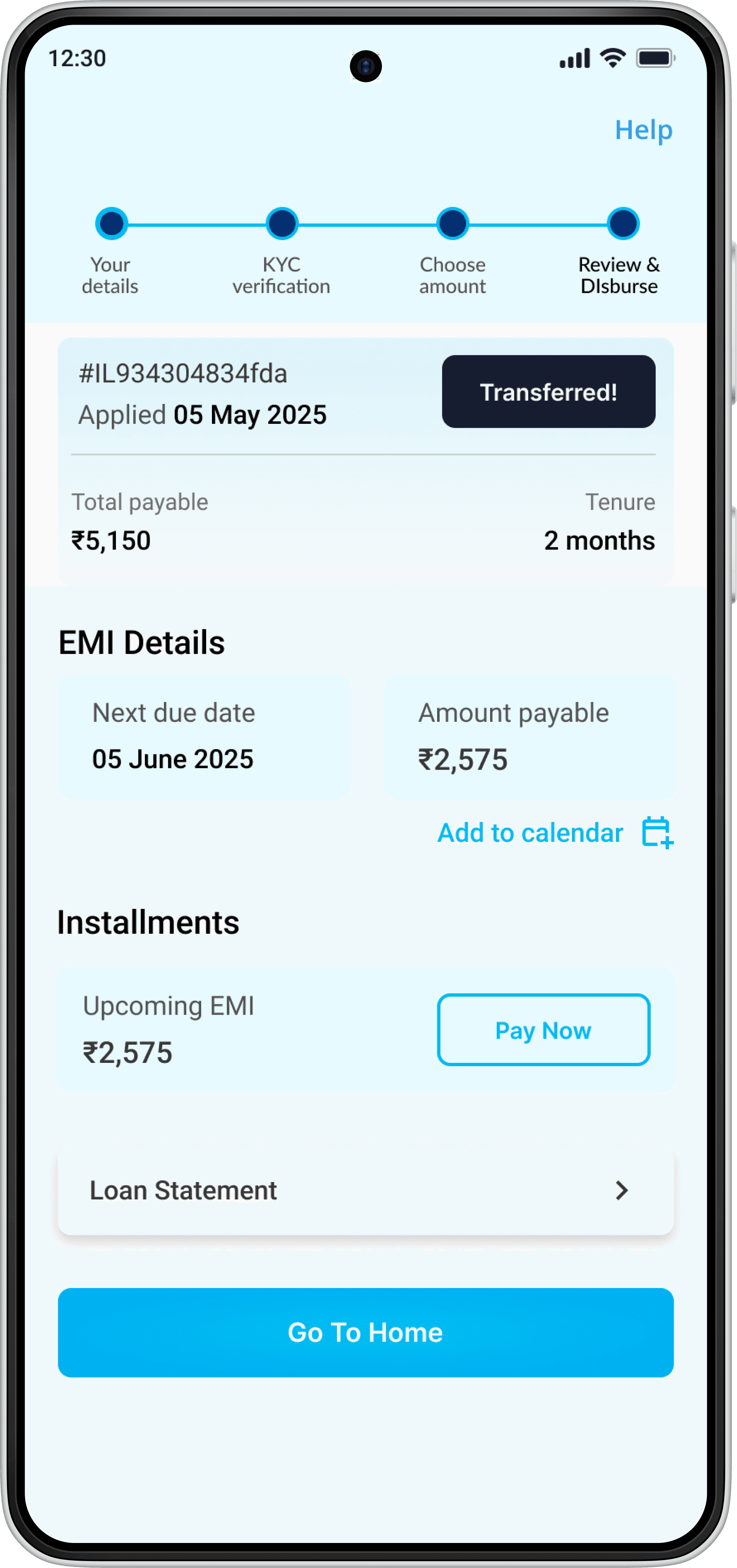
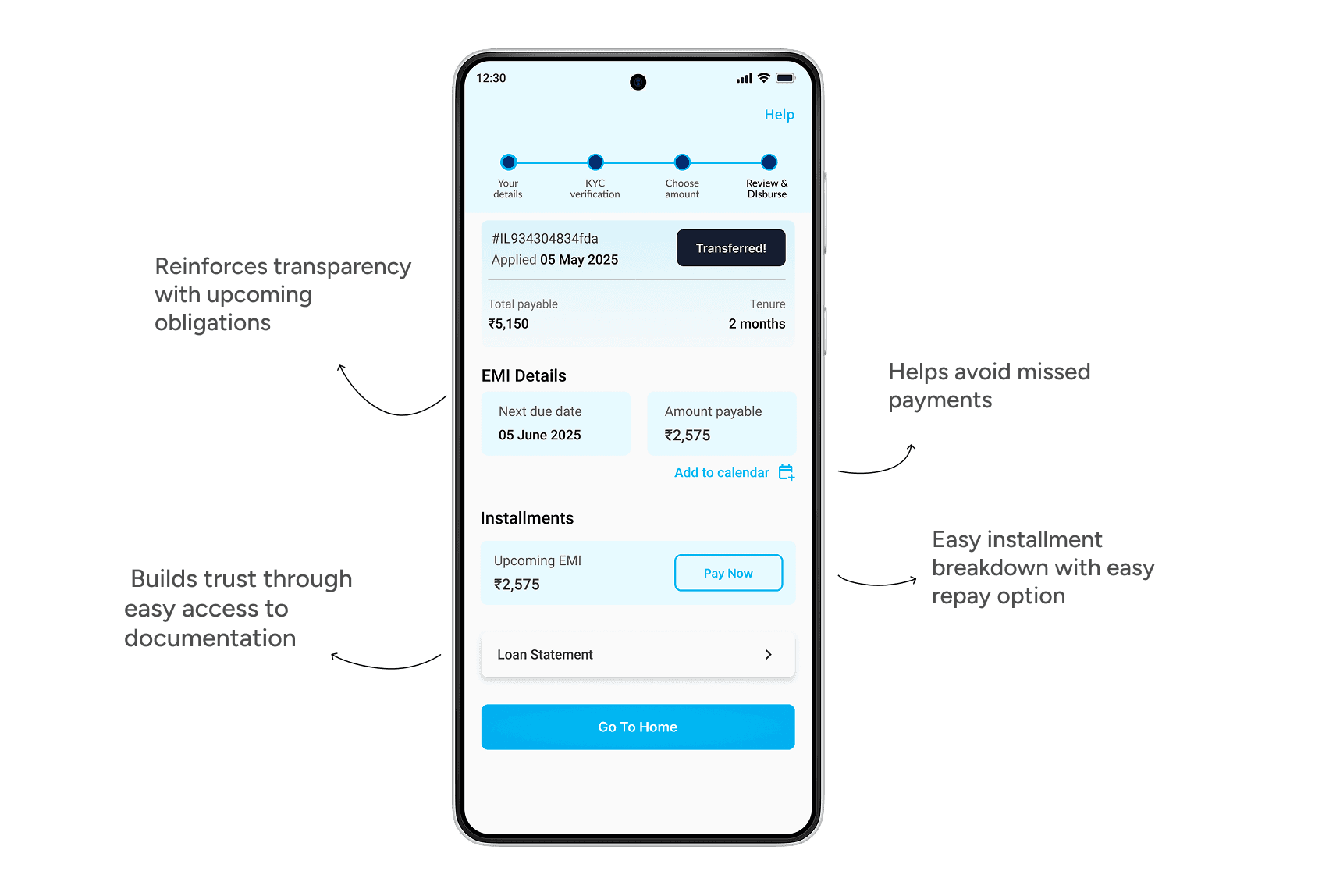
Easy access to details
I added a simple “Add to calendar” option and made upcoming EMIs clearly visible.
This helps users stay organized and avoid late payments—especially important for those juggling multiple responsibilities in their busy life.
Prototype
Impact
Unlocks access to credit for users without formal credit history
Expands Paytm’s user base into underserved segments
Creates a new revenue stream through high-volume microloans
If even 1 lakh users adopt this monthly:
₹15+ crore monthly revenue
₹180+ crore yearly revenue
This demonstrates that financial inclusion can drive business growth.
Learnings
This project changed how I think about design.
I learned that:
Real innovation lies in who you include, not what you build
Systems often fail not because they are broken, but because they are not designed for everyone
Ethical design can create both social impact and business value
Good design doesn’t just solve problems.
It changes who gets access to solutions.