India
2:51 PM
Booksy - Decision first reading platform
Booksy is a decision-first reading platform designed to help users discover and commit to their next book in under a minute.
Users don’t struggle to find books, they struggle to choose one. With platforms like Goodreads, users have access to thousands of books, reviews, and lists. But instead of helping, this often leads to decision fatigue. Users spend time scrolling, saving, and comparing, but struggle to actually pick a book and start reading.
This project explores how I shifted from endless browsing to quick decision making.
Timeline
4 weeks
Role
Product Design
Scope
End-to-end UX, from discovery to final UI
Impact
Reduced book selection time to < 90 seconds
Jump to Prototype
The problem
Users are not able to confidently choose their next book. This happens because:
Too many options create overwhelm
Reviews are long and hard to scan
There is no clear guidance on “what to read next”
As a result, users:
Spend more time browsing than reading
Drop off without making a decision
Lose motivation to continue reading
Can't complete their reading goals
Goals
Design a reading experience that:
Reduces decision time
Helps users quickly evaluate books
Encourages consistent reading behavior
User Research

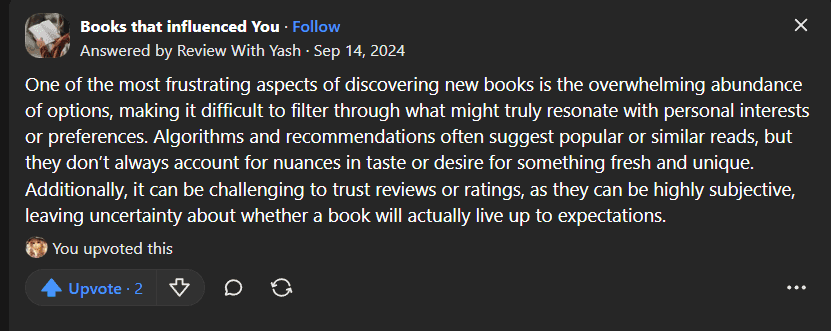


Key Findings
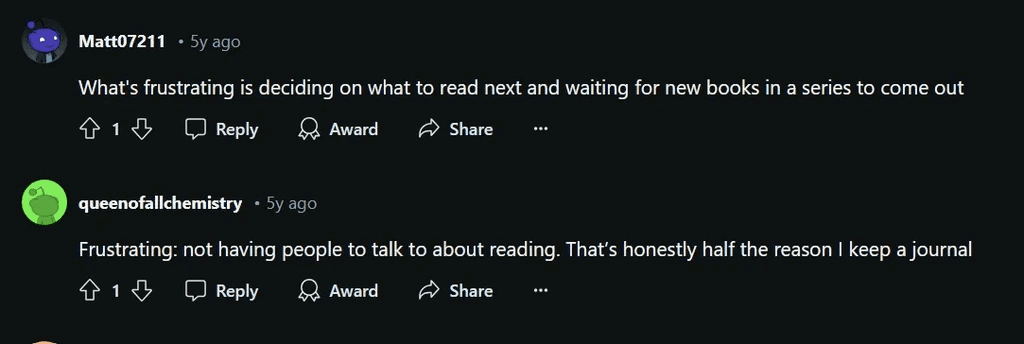
From these user posts, it’s clear that readers face a lot of frustration when it comes to discovering new books. Many struggle with choosing what to read next, especially when waiting for the next book in a series.
A lot of people are tired of books that go viral on TikTok or feel like they’re just popular because of hype. They want something that genuinely matches their taste.
Others mentioned how hard it is to trust ratings or recommendations, because they often suggest the same kind of books and don’t always match what the reader is looking for.
Key Insight
Users don’t think in book titles. They think in intent and mood.
“I want something light and easy”
“Something like Harry Potter”
“A short book before bed”
This insight shaped the entire direction of the product.
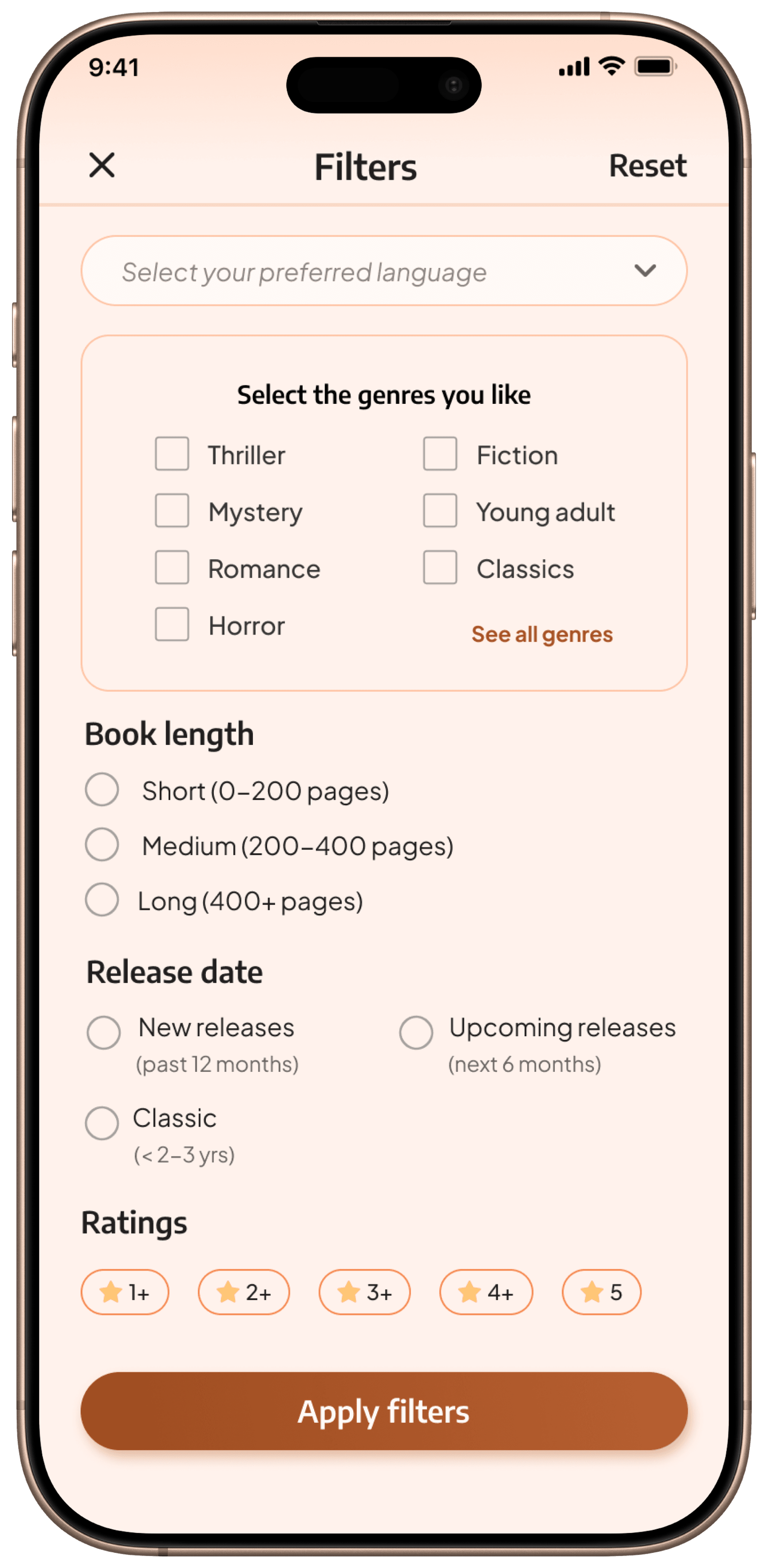
1. Smart Search Instead of Traditional Search
I replaced keyword-based search with intent-driven smart search.
Impact:
Faster discovery
Lower cognitive load
More relevant results
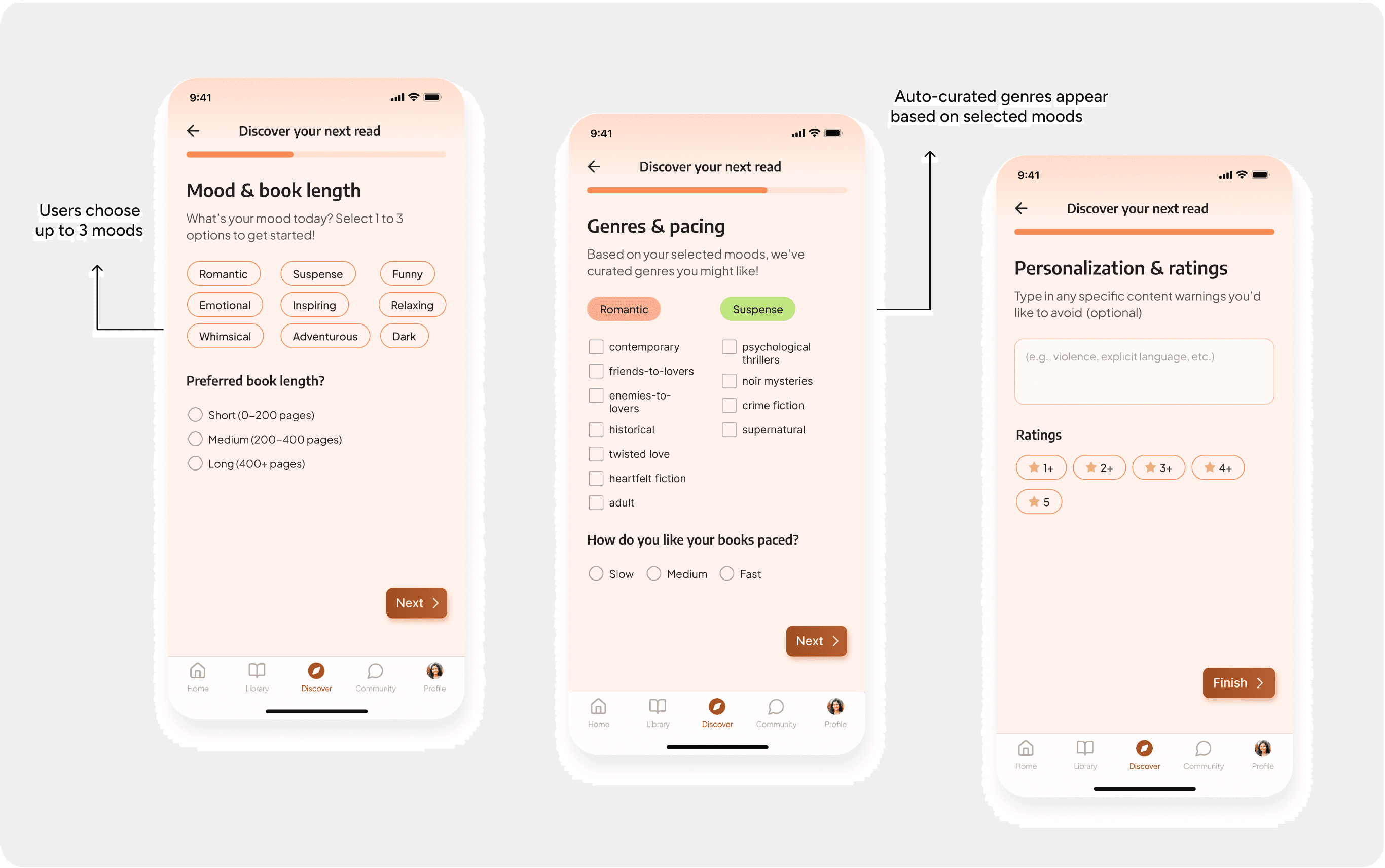
Iterating based on usability feedback
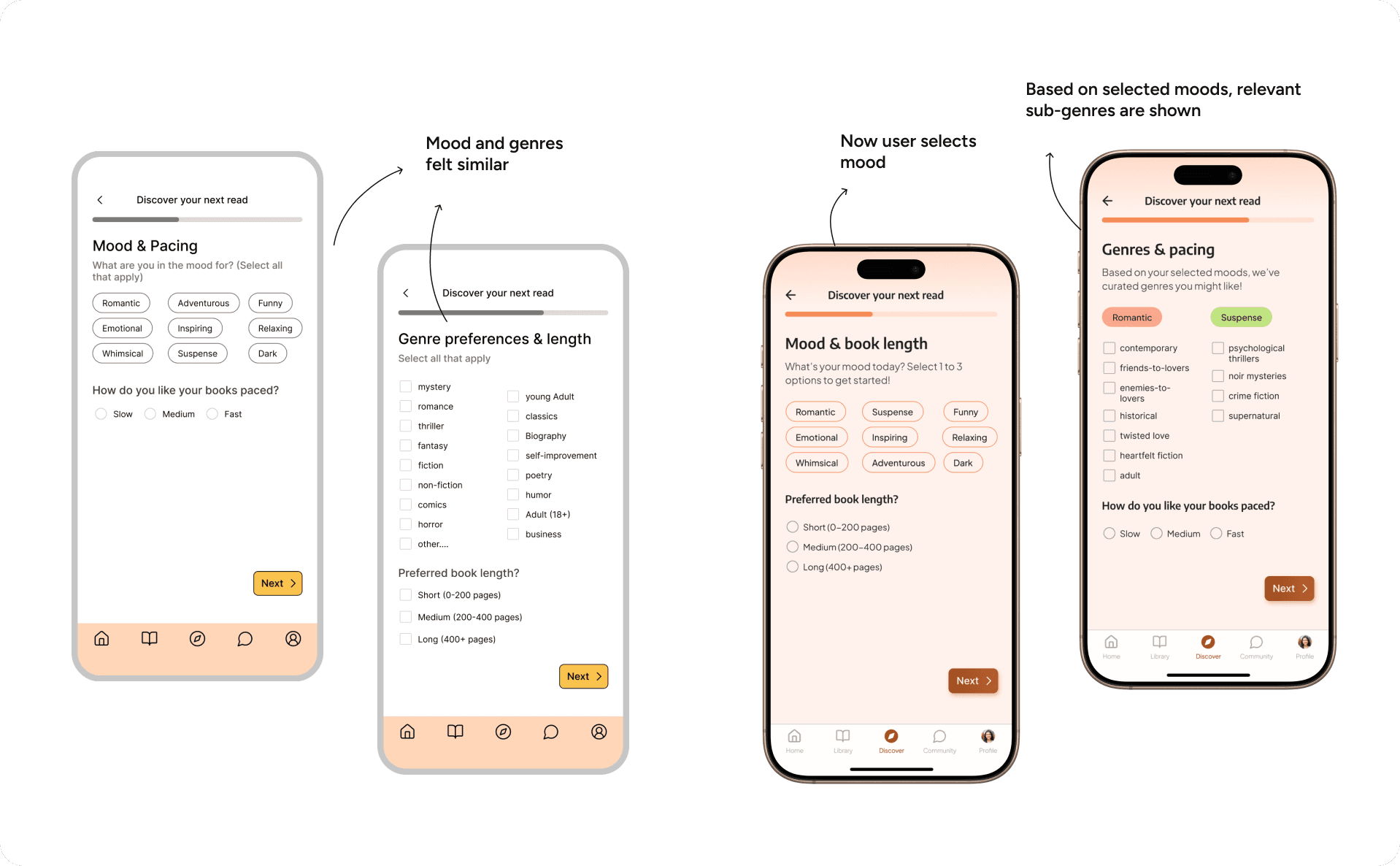
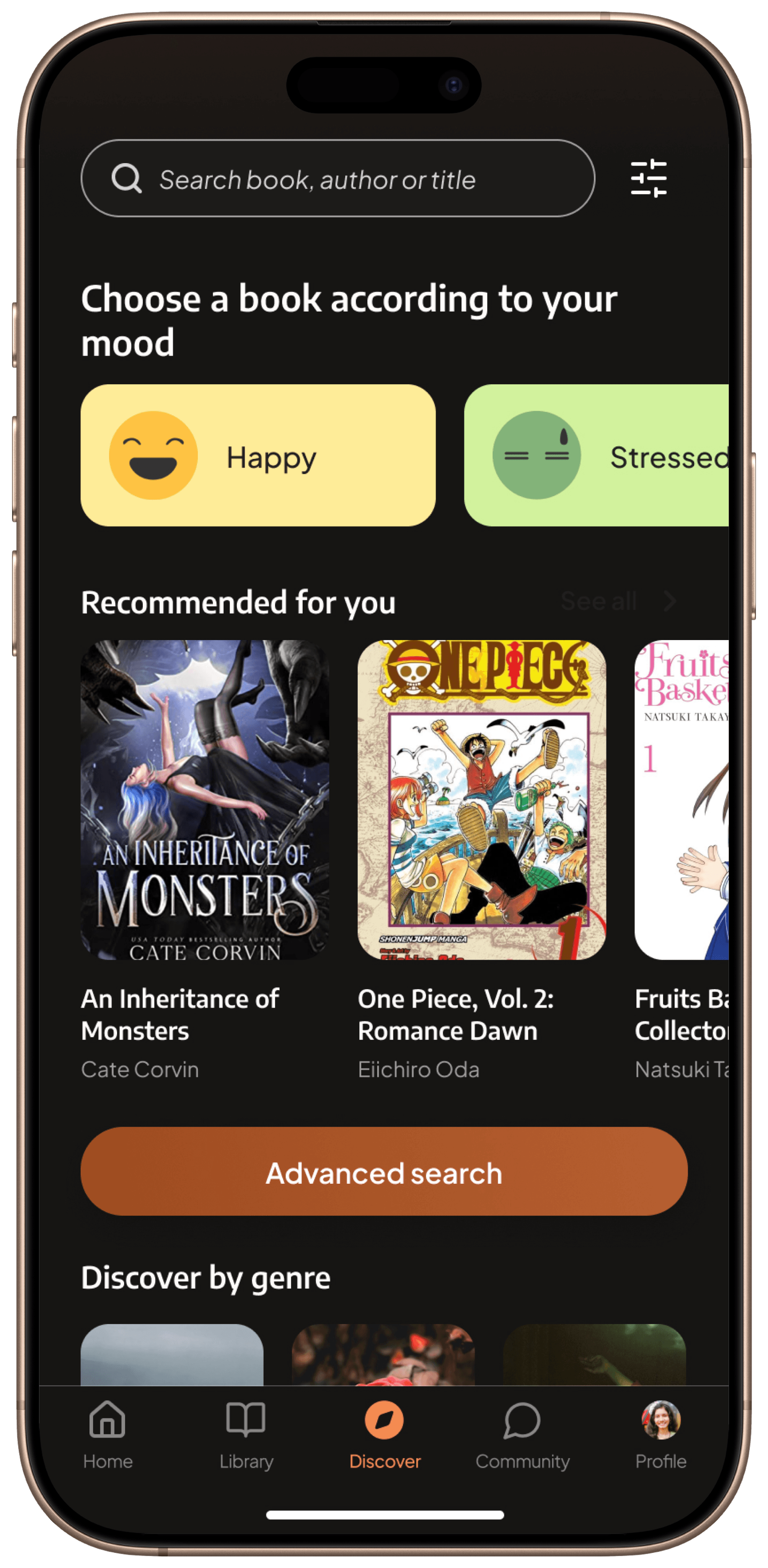
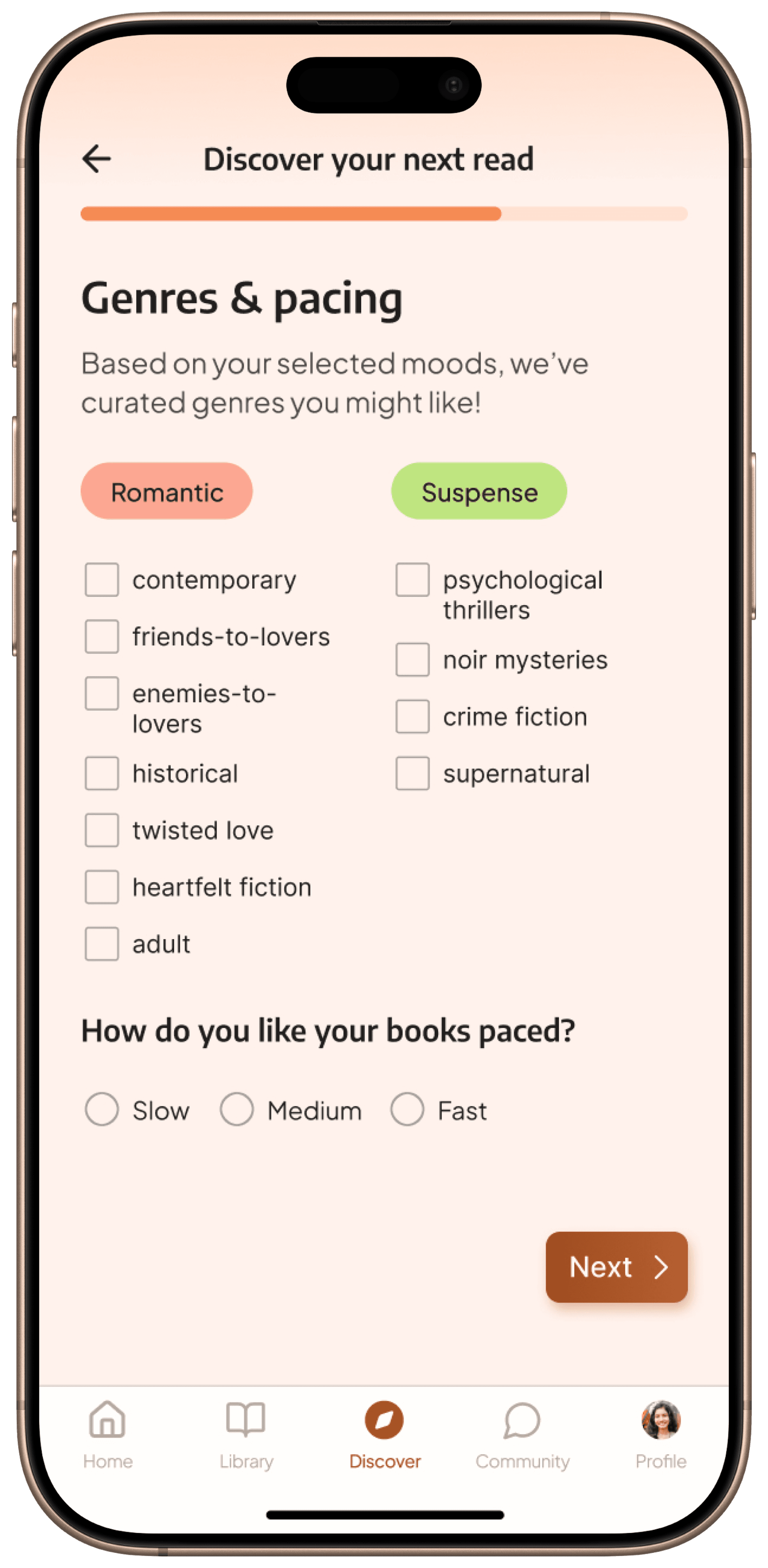
2. Mood-Based Discovery Instead of Generic Browsing
Users don’t open a reading app with a specific title in mind. They open it with a feeling.
Designing around mood reduces effort and makes discovery more intuitive.
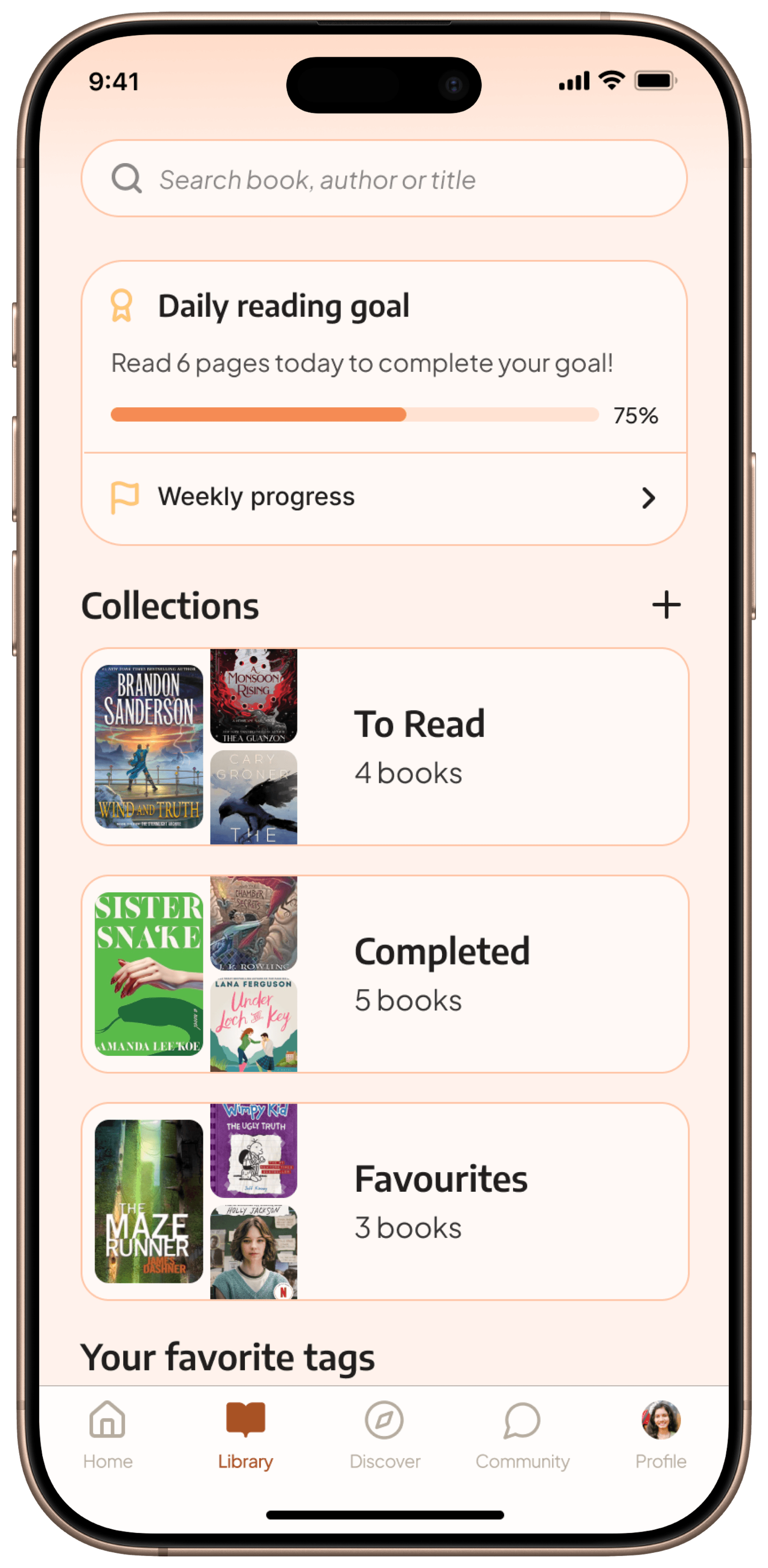
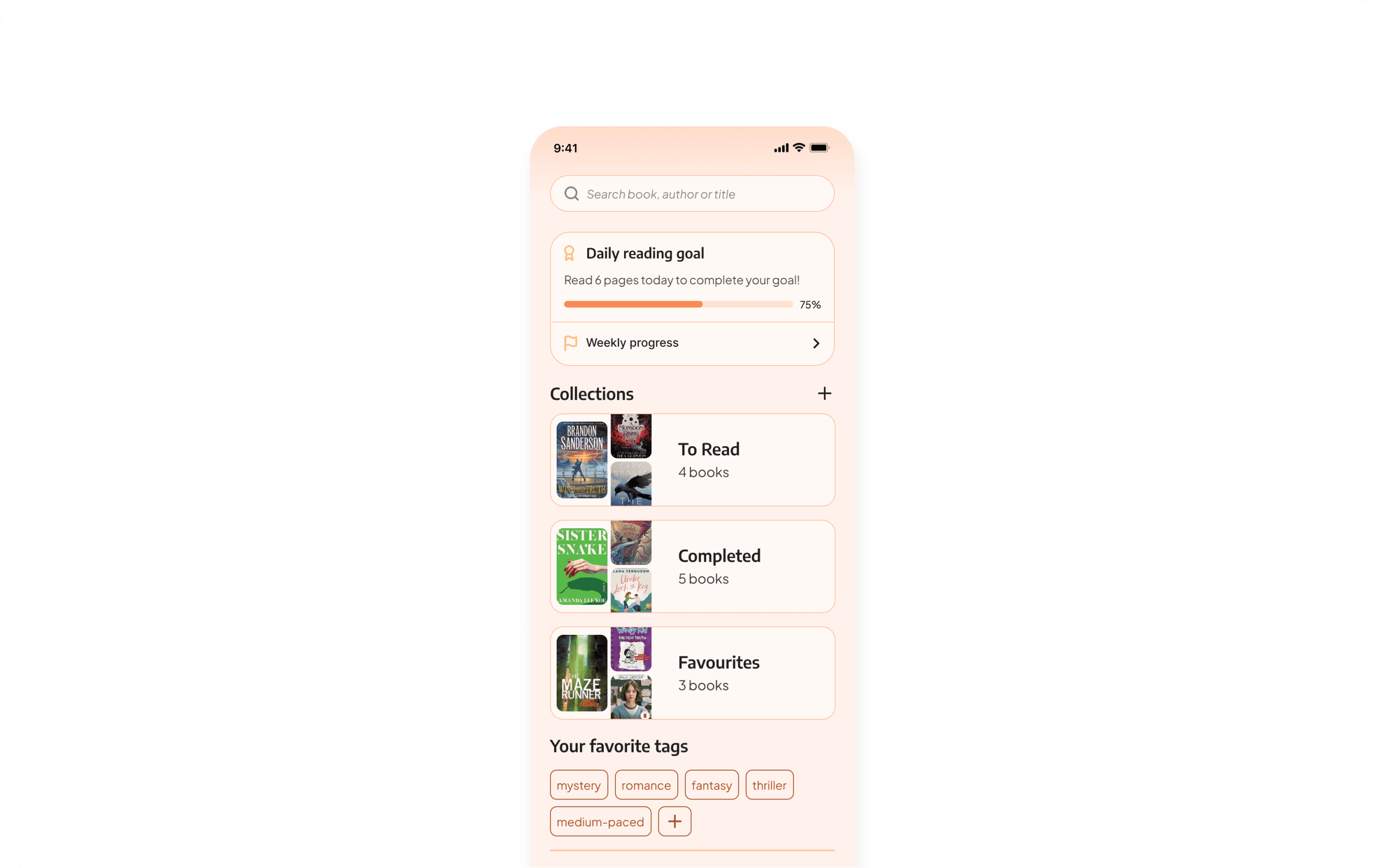
3. Library as a Reading Habit System, Not Just Storage
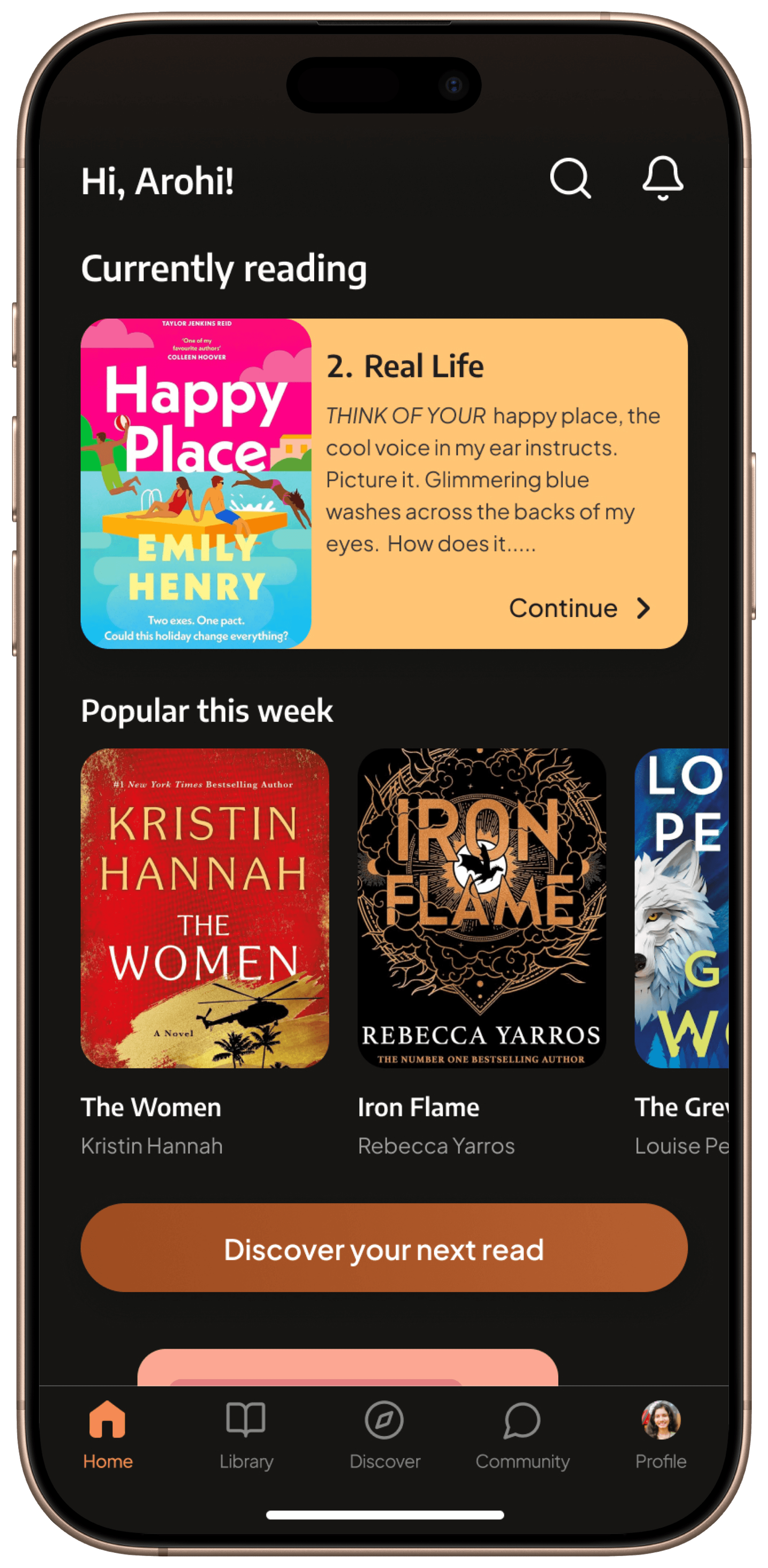
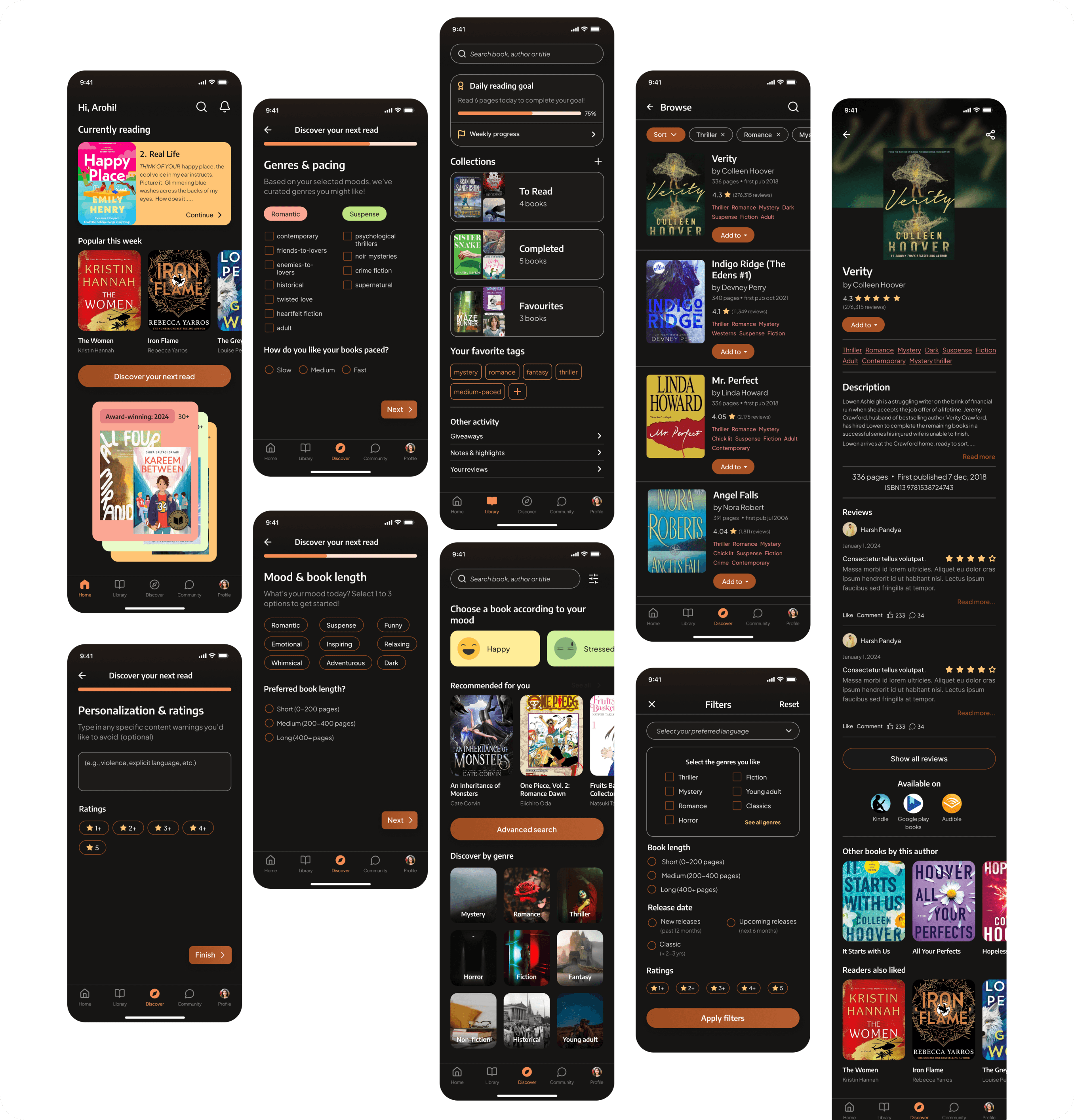
I designed the library as a reading hub that combines progress tracking with habit-building, allowing users to track daily goals, view weekly progress, organize collections, and use custom tags.
This shifts the experience from simply saving books to actively completing them, while streaks, badges, and visible progress gently encourage users to return consistently and build a long-term reading habit.
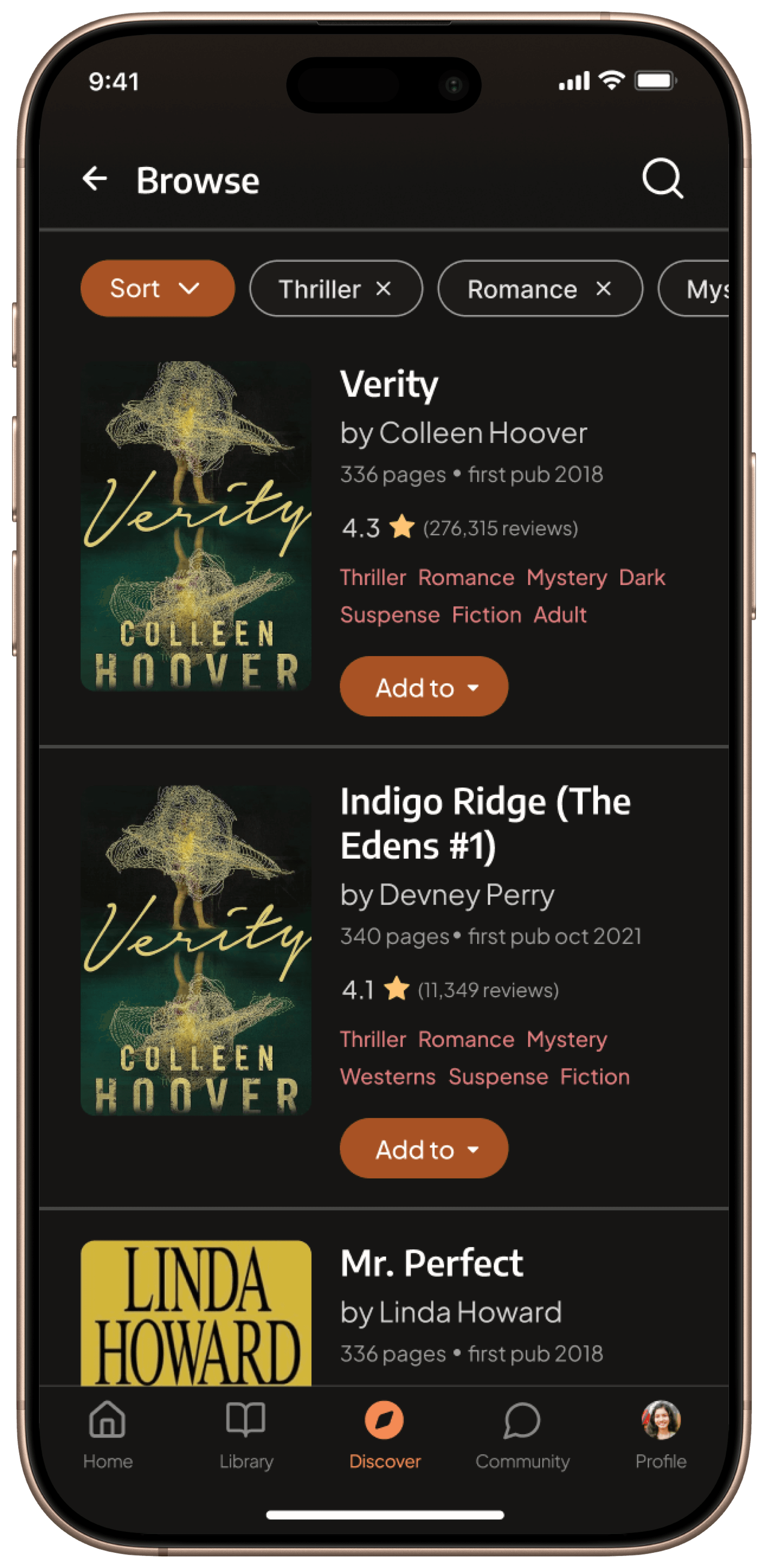
Dark Mode
From testing results, almost all of my participants wanted a dark mode.
So, I implemented a full dark mode - not just for looks, but as a core part of the user experience.
Prototype
Impact
Book selection time reduced to under 90 seconds
Reduced cognitive load during discovery
Increased intent to return through habit-building features
Encouraged shift from saving books to actively reading them
Booksy - Decision first reading platform
Booksy is a decision-first reading platform designed to help users discover and commit to their next book in under a minute.
Users don’t struggle to find books, they struggle to choose one. With platforms like Goodreads, users have access to thousands of books, reviews, and lists. But instead of helping, this often leads to decision fatigue. Users spend time scrolling, saving, and comparing, but struggle to actually pick a book and start reading.
This project explores how I shifted from endless browsing to quick decision making.
Timeline
4 weeks
Role
Product Design
Scope
End-to-end UX, from discovery to final UI
Impact
Reduced book selection time to < 90 seconds
The problem
Users are not able to confidently choose their next book. This happens because:
Too many options create overwhelm
Reviews are long and hard to scan
There is no clear guidance on “what to read next”
As a result, users:
Spend more time browsing than reading
Drop off without making a decision
Lose motivation to continue reading
Can't complete their reading goals
Goals
Design a reading experience that:
Reduces decision time
Helps users quickly evaluate books
Encourages consistent reading behavior
User Research
Key Findings
From these user posts, it’s clear that readers face a lot of frustration when it comes to discovering new books. Many struggle with choosing what to read next, especially when waiting for the next book in a series.
A lot of people are tired of books that go viral on TikTok or feel like they’re just popular because of hype. They want something that genuinely matches their taste.
Others mentioned how hard it is to trust ratings or recommendations, because they often suggest the same kind of books and don’t always match what the reader is looking for.
Key Insight
Users don’t think in book titles. They think in intent and mood.
“I want something light and easy”
“Something like Harry Potter”
“A short book before bed”
This insight shaped the entire direction of the product.
1. Smart Search Instead of Traditional Search
I replaced keyword-based search with intent-driven smart search.
Impact:
Faster discovery
Lower cognitive load
More relevant results
Iterating based on usability feedback
2. Mood-Based Discovery Instead of Generic Browsing
Users don’t open a reading app with a specific title in mind. They open it with a feeling.
Designing around mood reduces effort and makes discovery more intuitive.
3. Library as a Reading Habit System, Not Just Storage
I designed the library as a reading hub that combines progress tracking with habit-building, allowing users to track daily goals, view weekly progress, organize collections, and use custom tags.
This shifts the experience from simply saving books to actively completing them, while streaks, badges, and visible progress gently encourage users to return consistently and build a long-term reading habit.
Dark Mode
From testing results, almost all of my participants wanted a dark mode.
So, I implemented a full dark mode - not just for looks, but as a core part of the user experience.
Prototype
Impact
Book selection time reduced to under 90 seconds
Reduced cognitive load during discovery
Increased intent to return through habit-building features
Encouraged shift from saving books to actively reading them